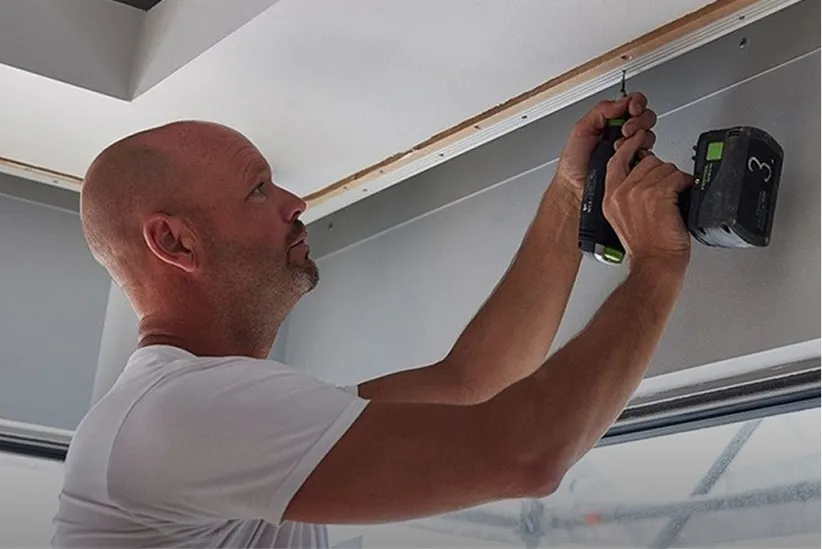
Blindspace recessed shade pockets and TrackTrim.

Window Modes is the authorized US distributor of Blindspace® — and the only US distributor fabricating the shades and tracks that go inside the profiles.
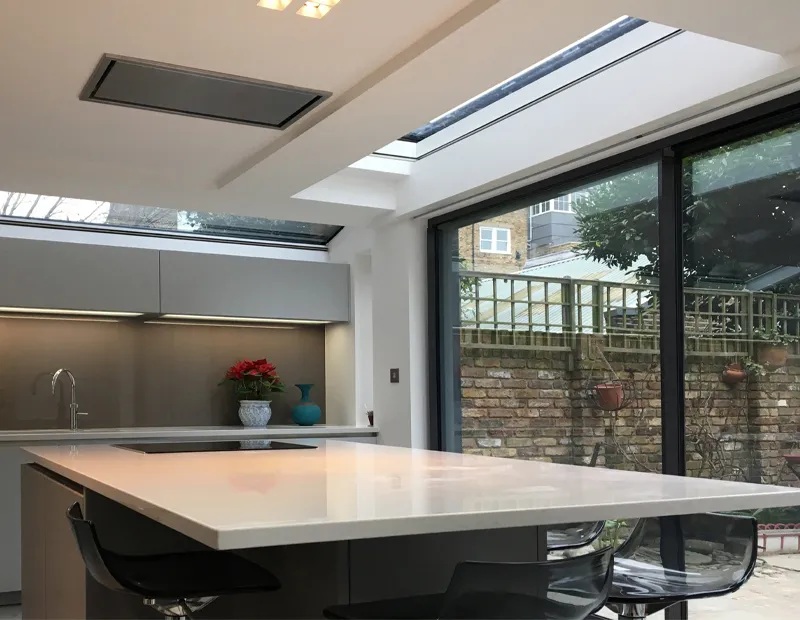
Modern kitchen with large white island, black chairs, skylights, and glass doors showing an outdoor brick wall.

A concealment system engineered to disappear into the ceiling.

Blindspace is an aluminum concealment system designed and manufactured in Sweden. The pocket sits inside the ceiling framing — the shade deploys from within the ceiling plane rather than from a visible bracket. The hardware is hidden inside the architecture.
The closure is held by the patented Blindspace® Safety Hinge — not by gravity. That's what makes the system work in any orientation: vertical windows, sloped openings, skylights, and reverse-operation shades all use the same closure mechanism. A standard aluminum shade pocket cannot do that.

Three products. Three jobs.

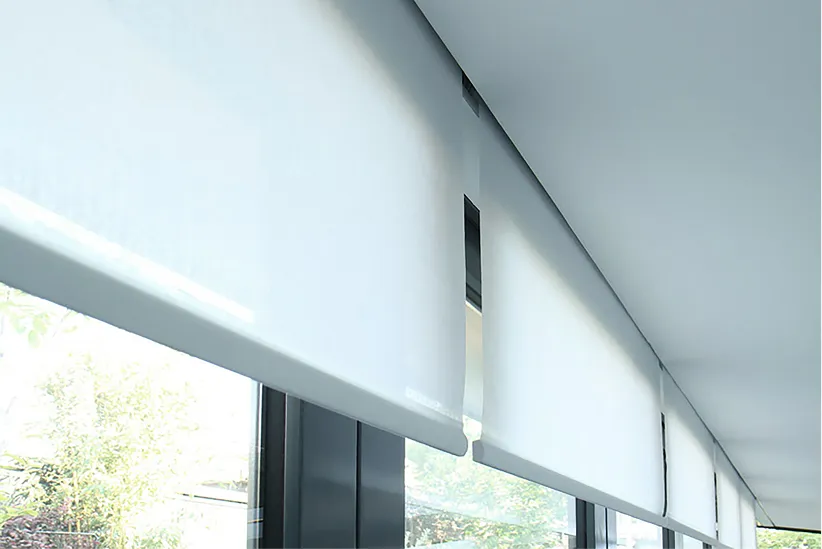
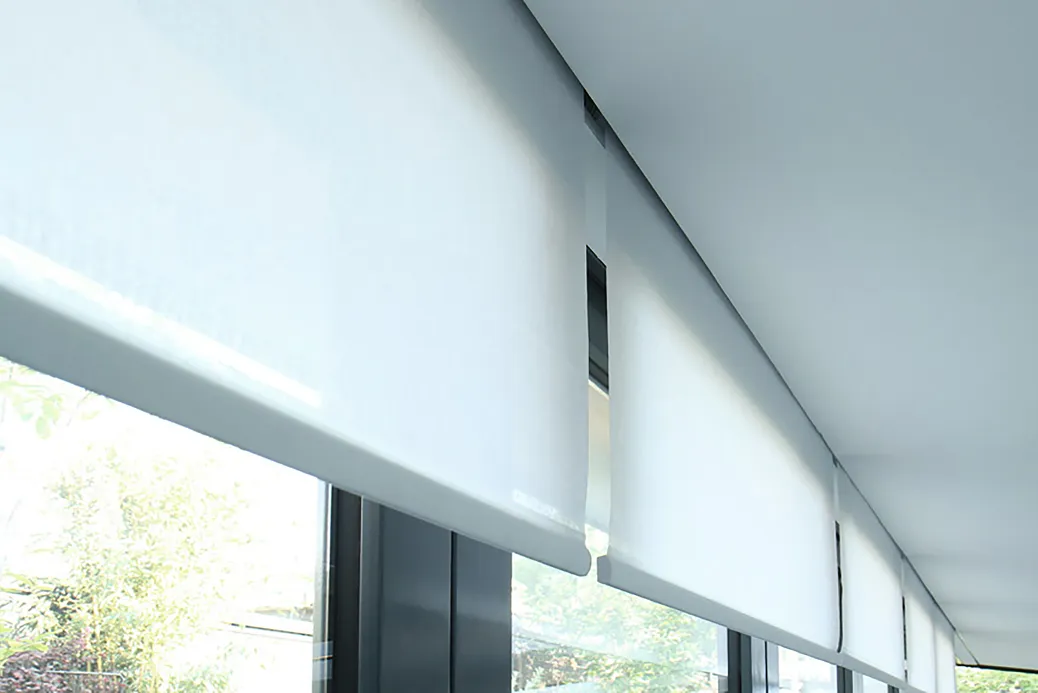
White roller blinds partially covering large windows with outdoor greenery visible through glass.
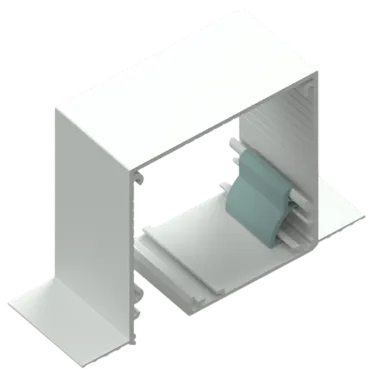
3D model of a white mechanical or structural component with rods and a blue-gray clip inside.
s series

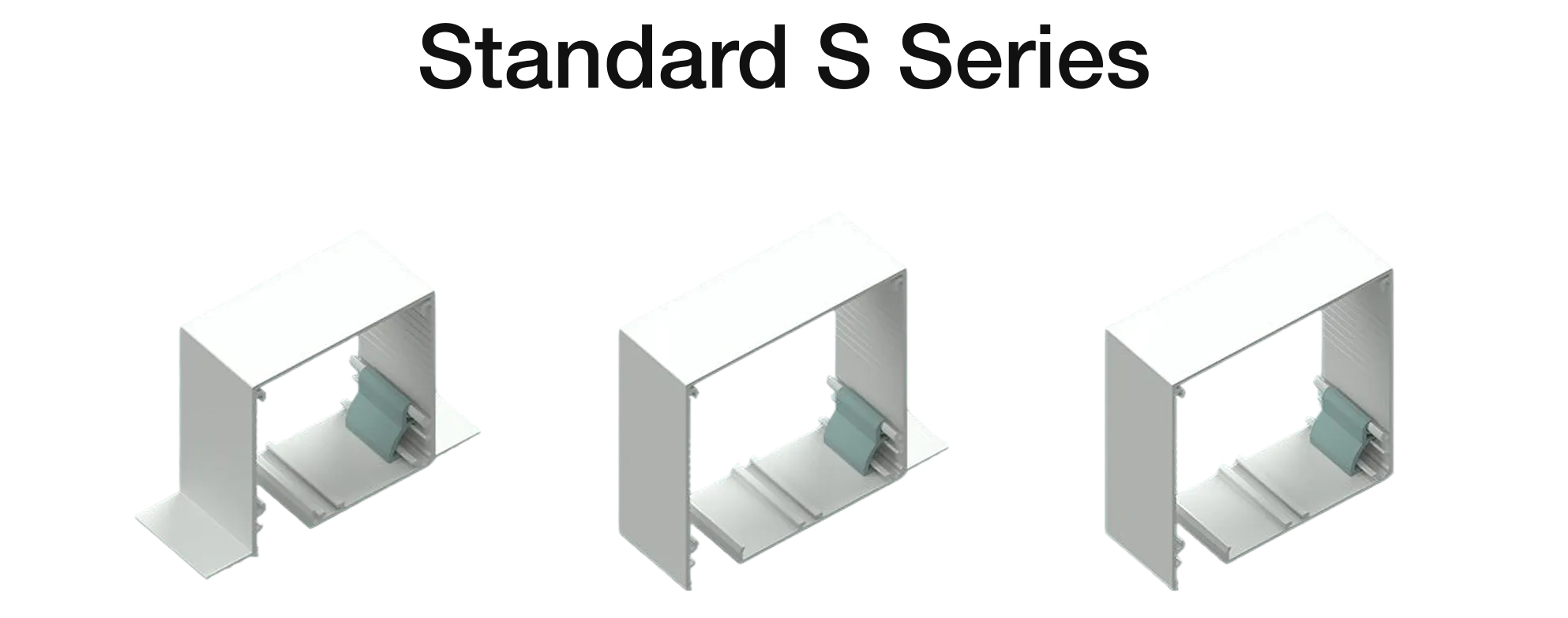
Standard concealment box

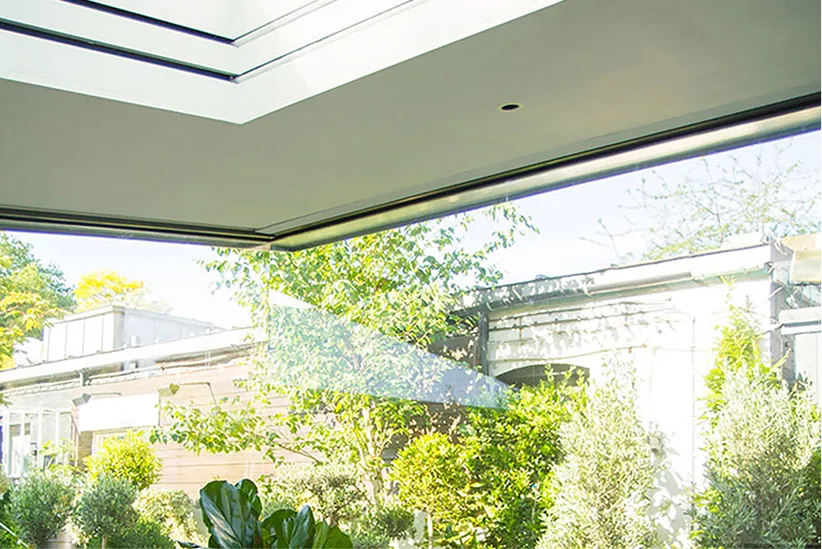
View of a garden with green plants seen through a large window with a skylight ceiling.
White industrial frame with a blue component and horizontal rods inside the base.
c series

Custom concealment box

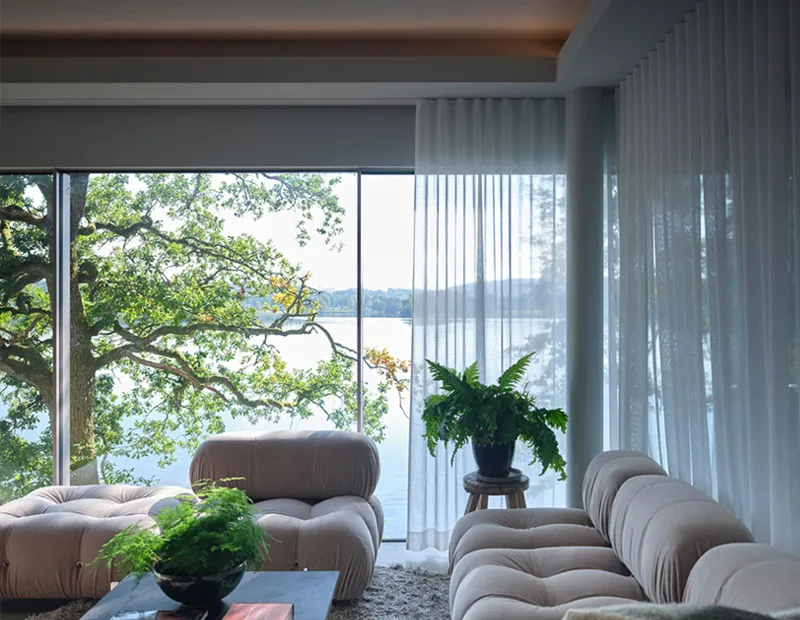
White sheer curtains hanging from a ceiling-mounted curtain track near a window.
White aluminum track trim with ridged edges and a deep central channel for construction use.
tracktrim

Drapery track concealment

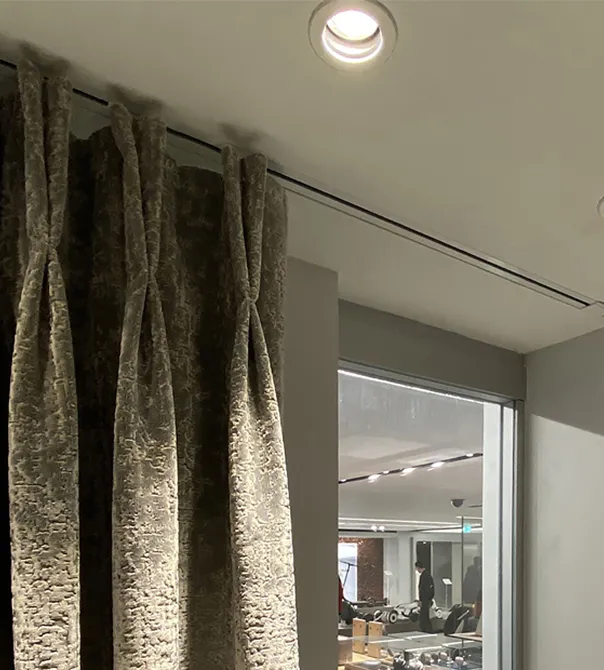
Close-up of beige and patterned curtains hanging from a white ceiling rail.

Standard concealment box.

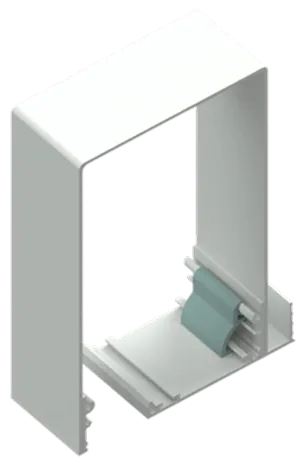
The standard Blindspace pocket. Available in fixed sizes (S100×100 and S130×130 are the most common) covering the bulk of motorized roller shade configurations.
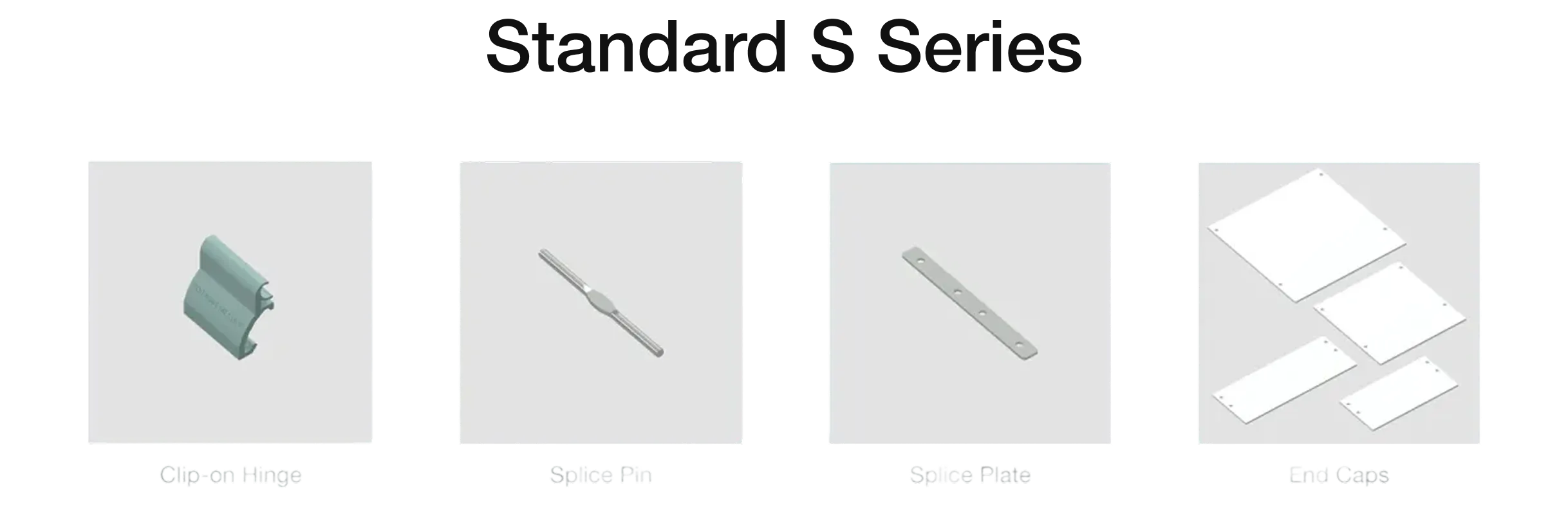
The S Series is what gets specified for floor-to-ceiling windows, sliding doors, and standard window openings. The pocket installs during construction; the shade drops in when the room is finished. Side boxes are available to conceal side channels and guide wires. The Safety Hinge allows the pocket to install in any direction — including future-proof installations where the pocket goes in before the shade is selected.
Three white aluminum frames with a blue-gray roller blind inside, labeled Standard S Series.
Standard S Series parts: clip-on hinge, splice pin, splice plate, and four end caps in white.
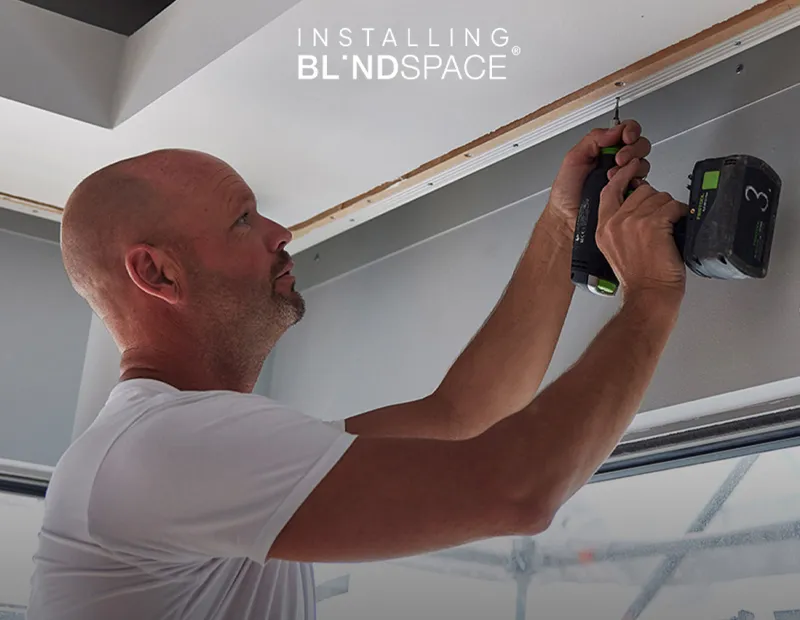
White roller blinds partially covering large windows with trees visible outside.Modern bathroom with large windows and a bathtub featuring Blindspace S Series roller shade concealment.A man in a white shirt installs a Blindspace ceiling panel using a power drill.
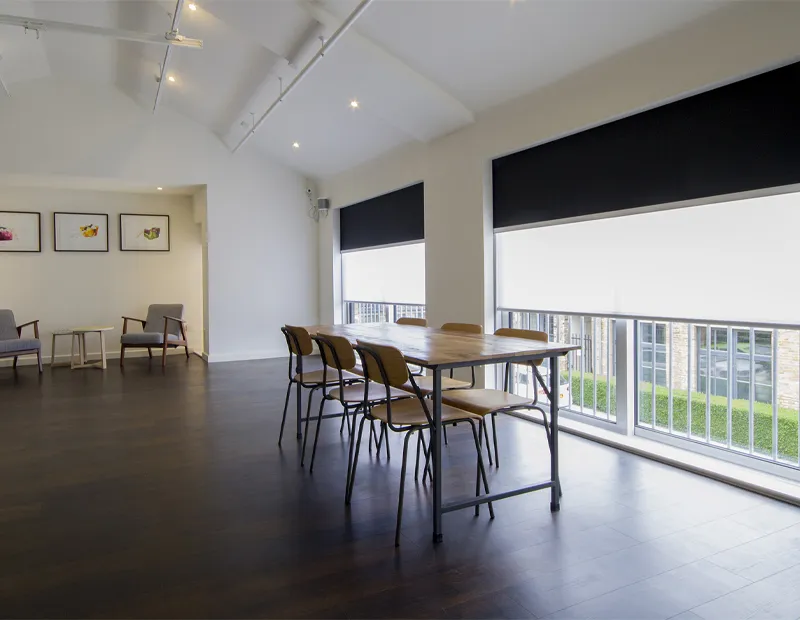
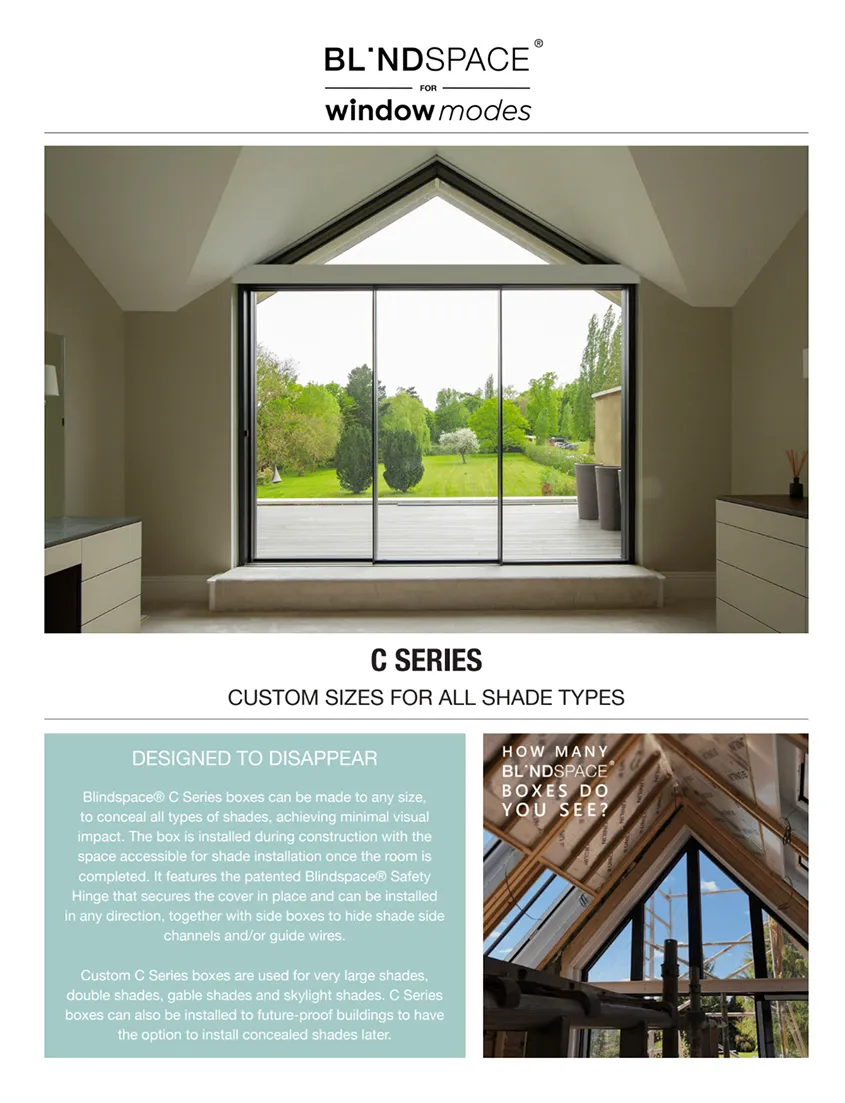
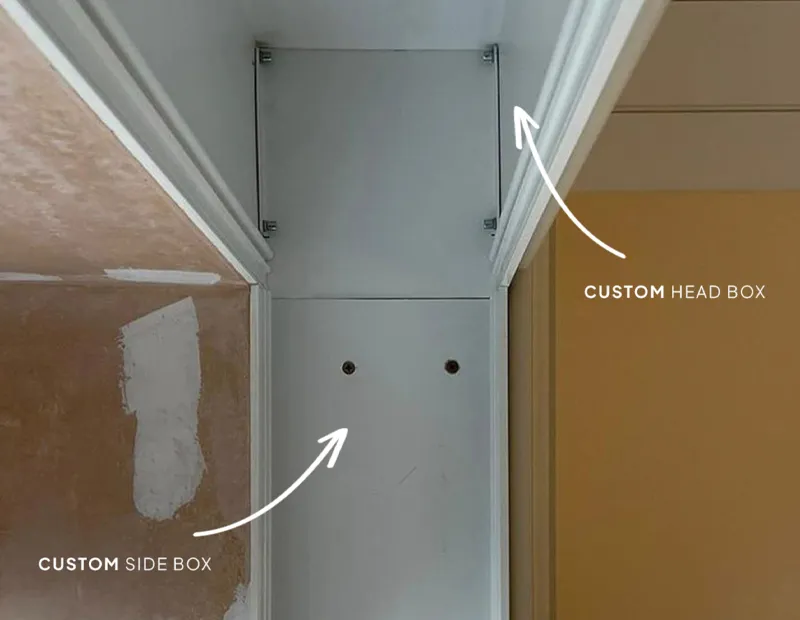
Bright room with a wooden table, six chairs, two armchairs, and large windows with black and white blinds.Room with large triangular window opening to a green garden, promoting Blindspace C Series window shades.Custom painted head box and side box installed at the top corner of a wall near ceiling trim.

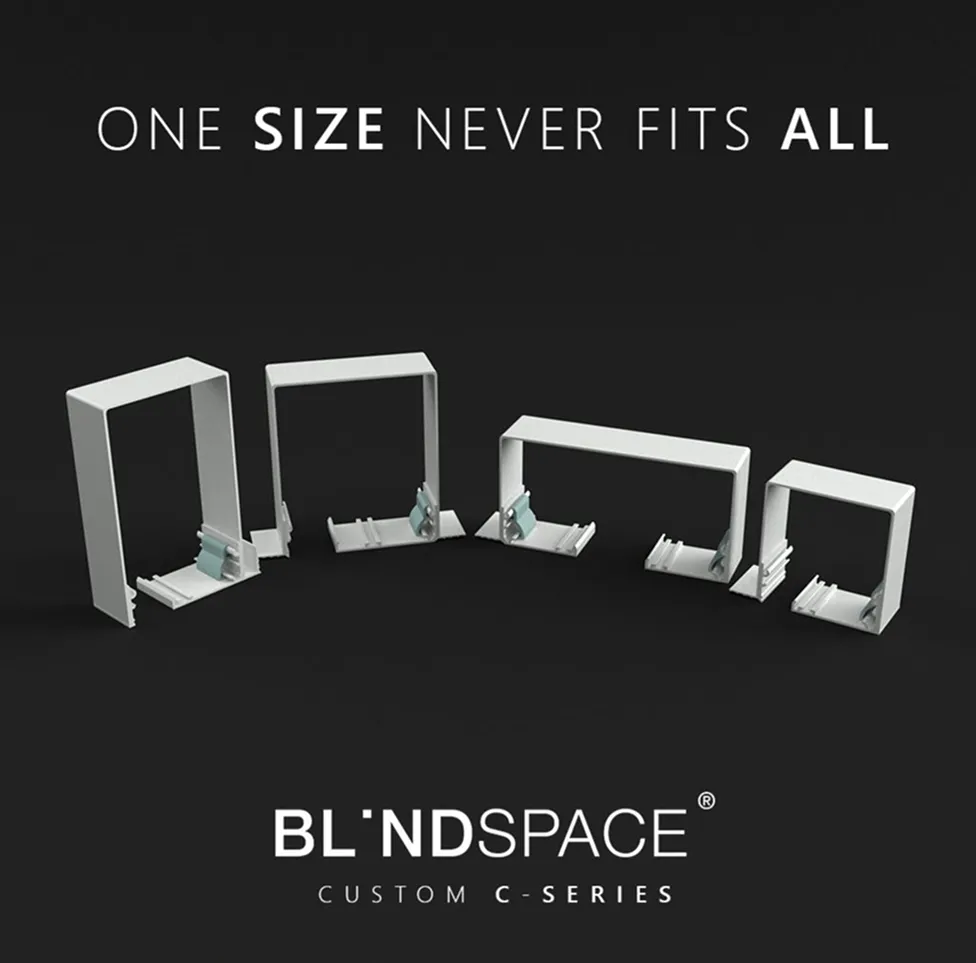
Custom concealment box.

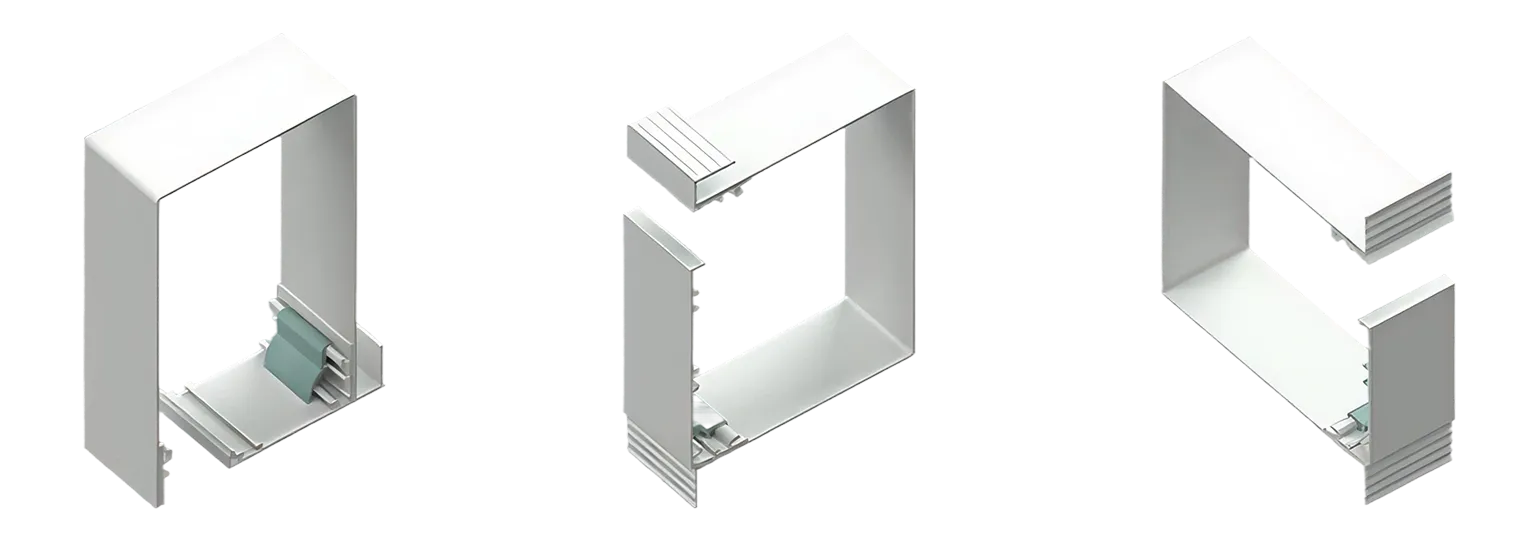
The custom Blindspace pocket. Built to any size, with flange options specified individually rather than chosen from a fixed set.
The C Series is what gets specified for very large roller shades, dual-shade conditions (two shades sharing one pocket), gable shades, and skylight shades — anywhere the S Series sizes don't reach the geometry the project needs. Same Safety Hinge as the S Series, same in-any-direction installation, same future-proofing capability.
Three views of a white hollow square frame with components attached inside, shown separately.
Different sized rectangular frames arranged in a row with text: One size never fits all, BLNDSpace Custom C-Series.

Flush-mount drapery track concealment.

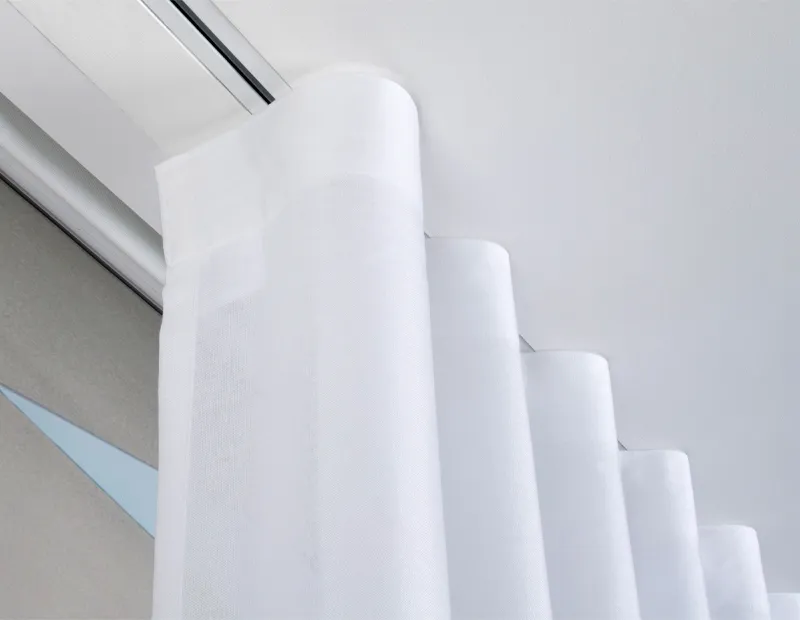
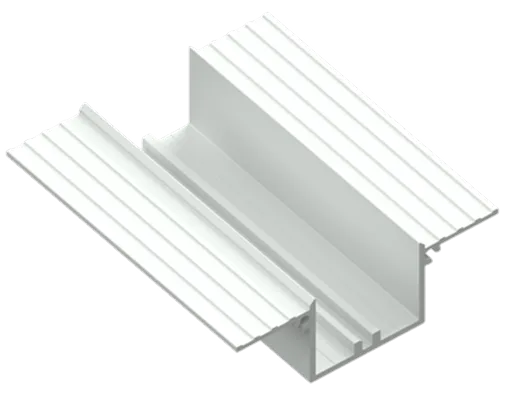
A recessing system for drapery tracks — different category from the S and C Series. The track is plastered flush into the ceiling, leaving the surface continuous above. The tracks and end-sets are available with skim coat flanges or chamfered edges for bending.
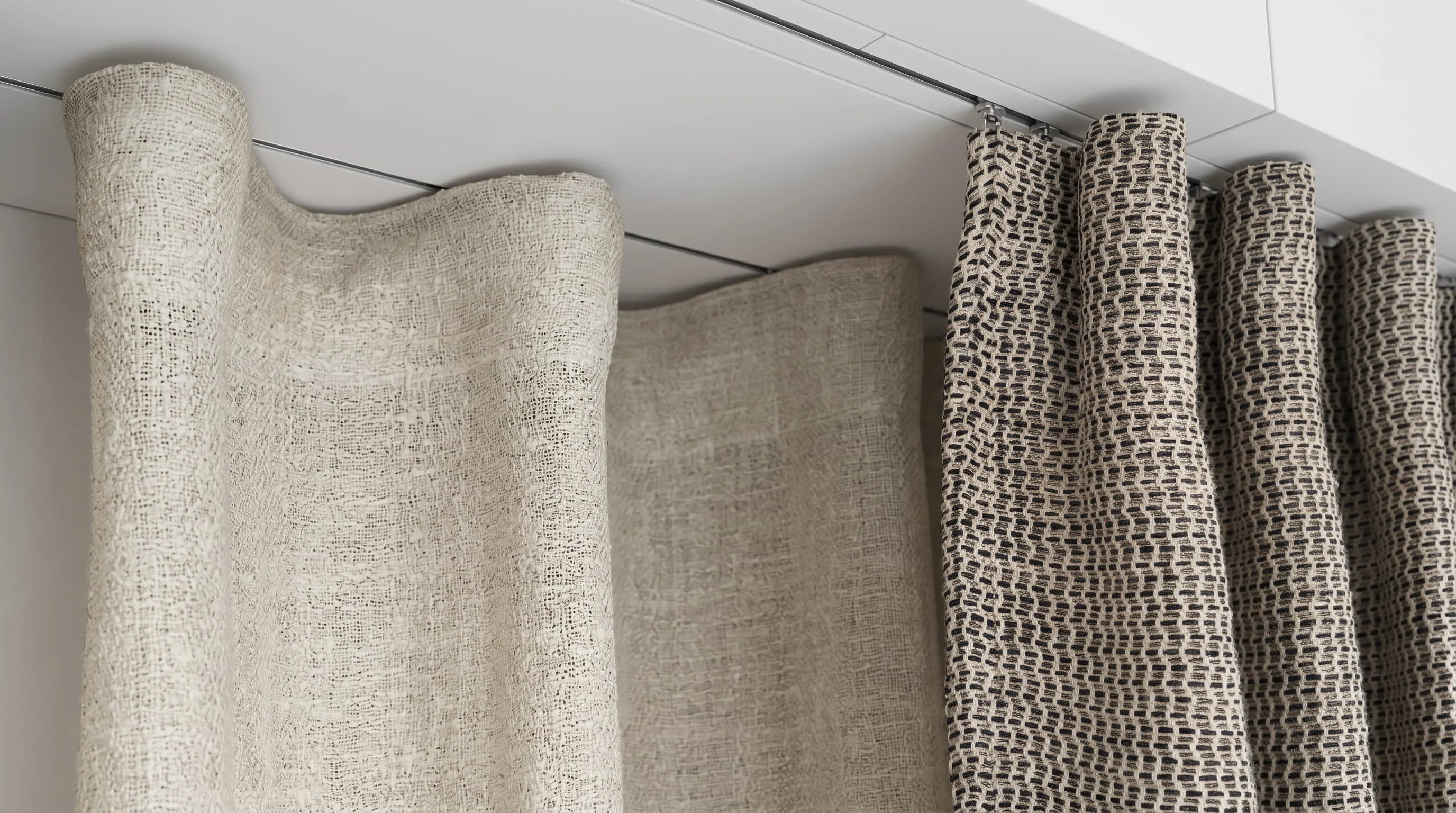
TrackTrim works with drapery tracks from Somfy, Lutron, and Crestron. Curved sections are available for tracks that turn corners. When TrackTrim and a Blindspace box are combined in the same opening, the drapery stacks under the Blindspace cover — a coordinated condition that handles drapery and roller shading from one ceiling plane.
Window Modes fabricates the drapery track itself, prepped to fit TrackTrim. Other US distributors sell the TrackTrim channel but not the matched track that installs inside it.
White modular pool edge components including corner pieces, curved section, and connectors.

Find your configuration.

The Blindspace catalogue covers 335 documented configurations across the S Series, C Series, TrackTrim, and Standard Wall Mount product lines. The table below maps common project conditions to the product, typical box size, and starting point for the CAD/BIM resource hub.
For configurations not listed — or to confirm a non-standard condition against actual shade and motor hardware — a Window Modes dealer works the spec directly with the fabrication workroom.

 By Window Condition

Standard window or sliding door — roller shade upto ~3m wide
S Series
S100×100
Most common configuration
Larger roller shade (~3–5m), or shade with sidechannels / guide wires
S Series
S130×130
Standard for wider openings
Corner window — two roller shades meeting at corner
S Series, paired
S100×100 or S130×130
Butted or mitred box options; room-side or window-side opening
Skylight or sloped roof window
S Series with SWM, or C Series
SWM for Skylights, C130×150
Safety Hinge holds in non-vertical orientation
Shaped opening (arched, trapezoid, slope-top)
C Series, custom
C89×89, C130×130, orbuilt to size
Flange options specified per project
Dual shades sharing one pocket
C Series
C130×150 or larger
Width and depth confirmed against both shade tubes
Drapery — straight or curved
TrackTrim
TT
Plastered flush; Somfy, Lutron, Crestron tracks
Drapery + roller in same window
S Series + TrackTrim
S100×100 + TT or S130×130+ TT
Drapery stacks under the Blindspace cover
Pocket installed during construction, shades selected later
S Series
S100×100 or S130×130
Future-proof drawings available in the resource hub
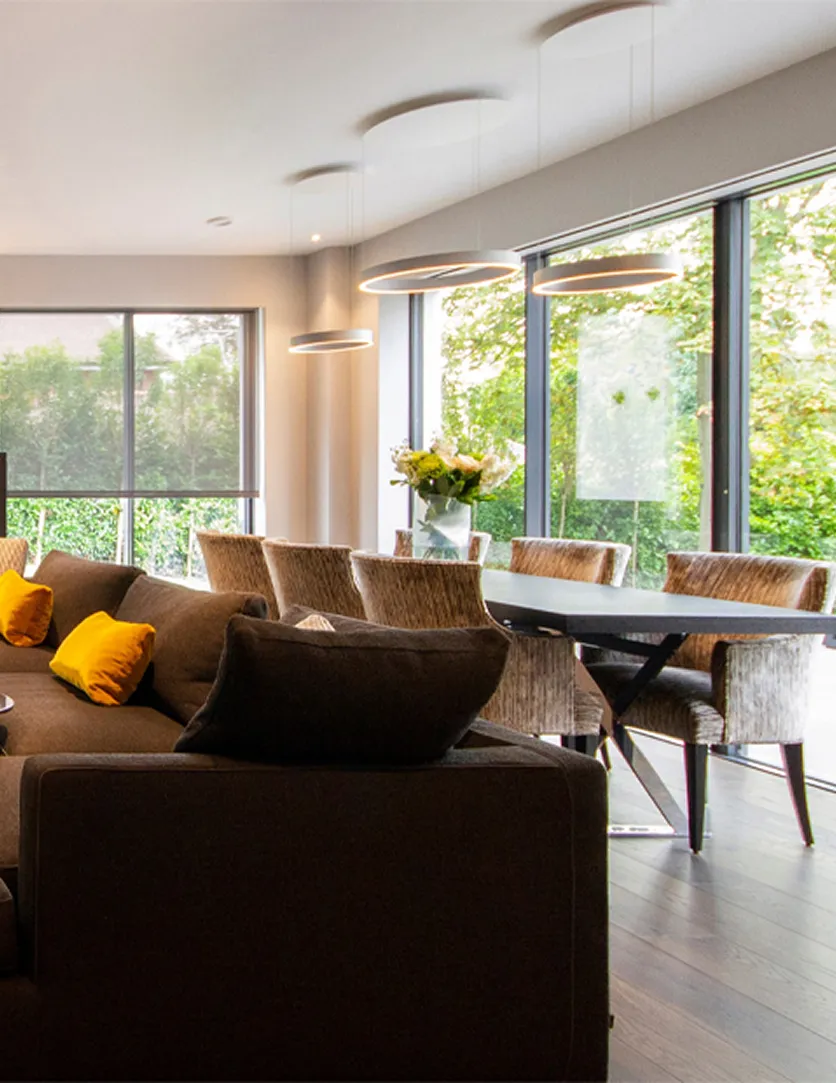
Modern dining area with large windows, round pendant lights, a dark table, and cushioned chairs.

When the pocket goes in before the shade is selected.

Blindspace pockets are often specified during construction even when shades aren't ordered yet. The pocket installs with the ceiling framing; the closure stays in place; the shade can be added later — sometimes years later — without opening the ceiling.
This is what Blindspace calls future-proofing. It comes up most often on:
  • Projects where the architect wants the option of shading without committing to a specific shade system
  • Speculative residential projects where the buyer will choose shading after move-in
  • Commercial fit-outs where shade selection is contingent on tenant decisions
  • Phased installations where the budget for shading is in a later phase than the build itself
The resource hub includes drawings for future-proof installations in both S100×100 and S130×130. The S Series is the standard product for this use case; the C Series can also be installed unshaded when the project condition requires a custom box.

What the Safety Hinge does that gravity-held pockets can't.

A standard aluminum shade pocket holds its fascia panel with gravity. The panel rests against the shade tube under its own weight. That works for one orientation — a vertical window with the pocket above and the shade hanging down — and fails for everything else.
The Blindspace Safety Hinge engages mechanically on all sides of the closure. It holds in any orientation:
  • Skylights
    Pocket installs horizontally in the ceiling; closure holds against gravity below.
  • Slope-top windows
    Pocket installs at an angle matching the slope; closure holds at the slope angle.
  • Trapezoid and other shaped openings
    Pocket and closure can be fabricated to non-rectangular geometry.
  • Reverse-operation shades
    Shade operates upward from a sill-mounted pocket; closure holds at the bottom.
  • Corner conditions
    Butted or mitred boxes at the corner, with room-side or window-side opening.
There's a specifying consequence too. The Safety Hinge is patented. A specification written as "Blindspace by Window Modes" rather than "Blindspace or approved equal" is defensible because no functional equivalent exists. That matters on projects where the architect controls the spec tightly through CDs.

What Window Modes also offers — custom fabrication.

A standard aluminum shade pocket holds its fascia panel with gravity. The panel rests against the shade tube under its own weight. That works for one orientation — a vertical window with the pocket above and the shade hanging down — and fails for everything else.
Man using a cordless drill to install a wooden trim near the ceiling indoors.

Cut-to-size

Profiles arrive sized to the rough opening rather than cut in the field. Mitered corners and end-cuts are done in the workroom against the project dimensions, not on-site by the installer

View upward of a modern building edge with cloudy sky and treetops in the background.

Mitered corners

Custom corner fabrication for pockets that wrap architectural corners. The S Series in a corner window can be specified butted (two boxes meeting straight) or mitred (two boxes meeting on a 45° corner cut). Either is fabricated to the corner geometry before shipping.
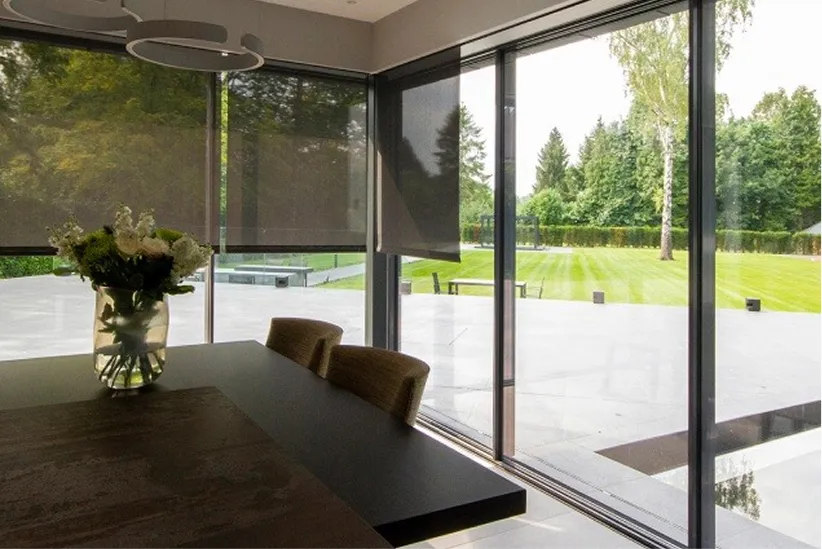
Modern dining area with glass table, chairs, flower vase, and large windows overlooking green lawn.

Custom colors

Powder-coat and finish options beyond the standard catalogue.

Questions architects and dealers ask.

What is Blindspace?

Blindspace is an aluminum concealment system designed and manufactured in Sweden that recesses roller shades and drapery track hardware into the ceiling plane. The patented Safety Hinge closure is what makes it work in specialty orientations — skylights, slope-top shades, reverse-operation shades — where gravity-held pockets fail. Window Modes is the authorized US distributor.

Who distributes Blindspace in the United States?

Window Modes is the authorized US distributor of Blindspace®. Window Modes warehouses Blindspace profiles and ships to dealers and other distributors nationally. Window Modes is also the only US distributor that fabricates the shades and tracks that install inside the profiles.

What's the difference between Blindspace S Series and C Series?

The S Series is the standard Blindspace pocket. It comes in fixed sizes — S100×100 and S130×130 are the most common — covering the bulk of motorized roller shade configurations. The C Series is the custom pocket, built to any size with flange options specified individually. The S Series is the starting point for most projects; the C Series handles very large shades, dual-shade conditions, gable shades, and skylight conditions.

TrackTrim is a different category — a recessing system for drapery tracks, not a pocket. If the condition involves drapery, TrackTrim is the right system regardless of what the window would otherwise take.

What is Blindspace TrackTrim?

TrackTrim is a Blindspace recessing system for drapery tracks. The track is plastered flush into the ceiling, leaving the surface continuous above. TrackTrim works with drapery tracks from Somfy, Lutron, and Crestron. Curved sections are available for tracks that turn corners.

Window Modes fabricates the drapery track prepped to fit TrackTrim — other US distributors sell the channel without a matched track. When the condition involves recessed drapery, TrackTrim is the right system. When it involves roller shades, the S or C Series pockets apply.

Can Blindspace pockets accommodate dual shades?

Yes — with the C Series. A single C Series pocket can carry two shades, typically a light-filtering shade and a room-darkening shade sharing one pocket. The C Series provides the wider, deeper geometry that makes dual shades work, built to the specific dimensions the project requires. Pocket dimensions are confirmed against both shade tube diameters and both motor assemblies before framing.

What's the difference between Blindspace and a standard shade pocket?

A standard aluminum shade pocket holds its fascia panel with gravity. Blindspace uses the patented Safety Hinge, which engages mechanically. Gravity-held pockets only work in standard vertical window applications. The Safety Hinge lets the pocket work in any orientation — horizontal skylights, angled slope-top openings, reverse-operation shades.

There's a secondary difference: the Safety Hinge is patented, so a Blindspace specification can be written to prevent substitution.

Does Blindspace work for shaped windows and non-rectangular openings?

Yes. The Safety Hinge — not gravity — is what makes Blindspace work for shaped openings. Slope-top shades, trapezoid openings, skylights, and reverse-operation shades all need a closure that holds in non-standard orientations. Window Modes fabricates the specialty shapes that work with Blindspace: trapezoids, slope-top shades, arched-top configurations, and skylight shades.

Can Blindspace be retrofitted into an existing ceiling?

In most cases, no. Blindspace needs ceiling framing to accommodate the pocket depth. The profile is installed during construction, before the ceiling is closed. Retrofitting into a finished ceiling means opening the ceiling plane, installing framing, setting the profile, and closing the ceiling around it. That's a construction project, not an installation.

Blindspace is a design-phase decision. Once the ceiling closes, the geometry is fixed. If a recessed shade is wanted but the ceiling is already closed, surface-mounted concealment options exist — they aren't Blindspace.

Where to start.
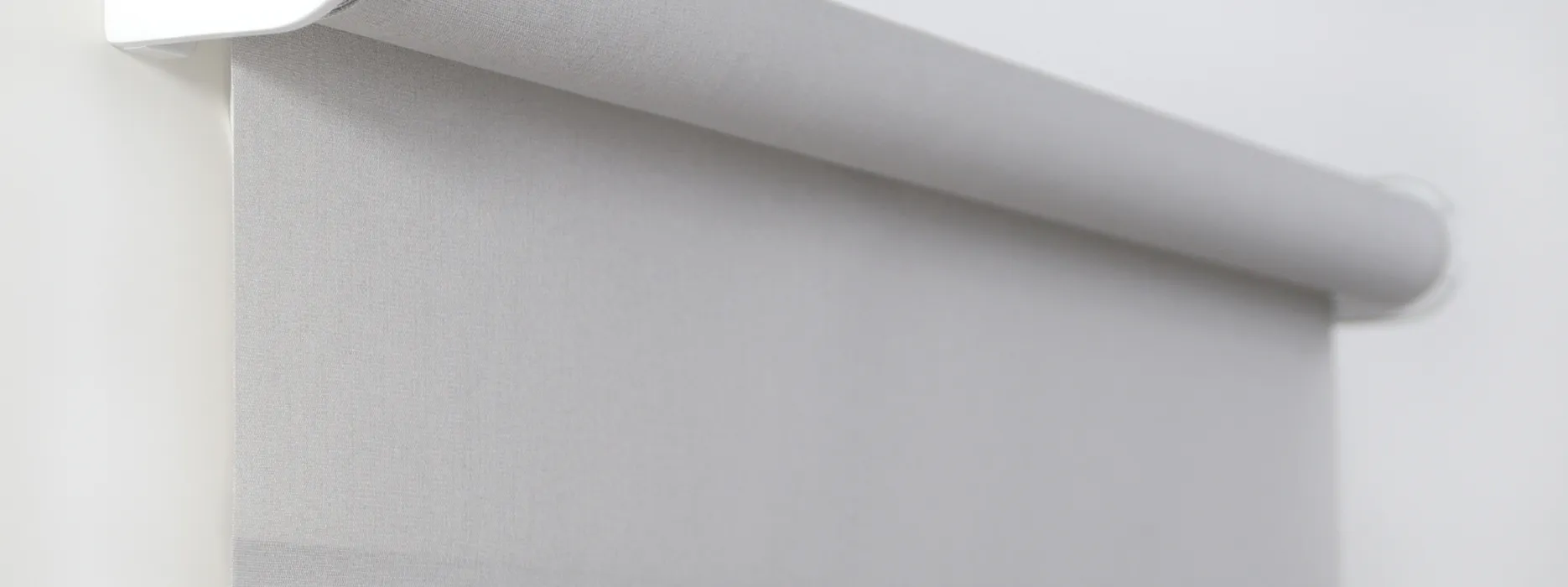
Close-up of a partially rolled down light gray fabric roller blind on a white wall.