Drapery track, fabricated for the architectural condition.
Window Modes fabricates drapery track in-house — straight, curved, and 90° bends; motorized on Somfy Glydea and Lutron; with top-mount motors that sit in the ceiling, out of the fabric line. Not the curtain rod — the track detail the drawing depends on.
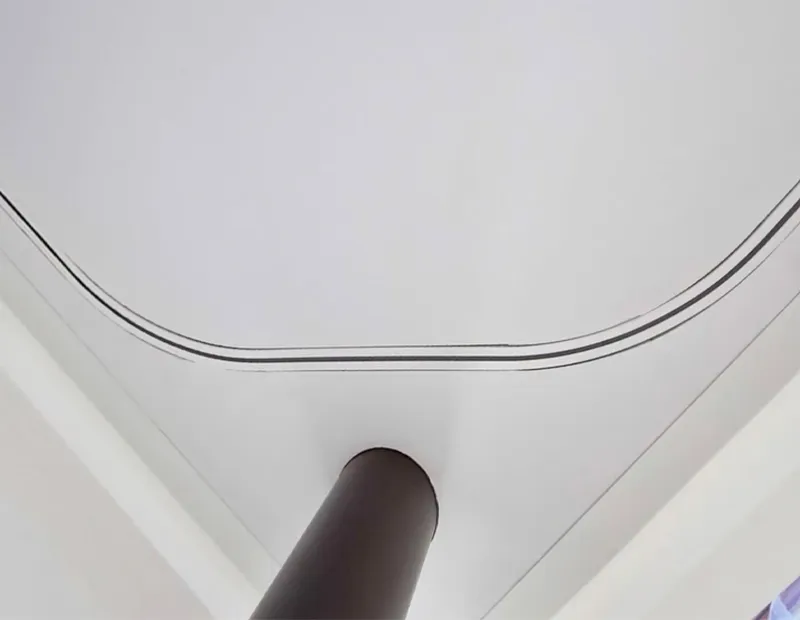
Ceiling with curved molding and a dark cylindrical pillar extending upward.

We fabricate the track — not just resell the profile.

A hardware distributor sells you a length of track. Window Modes runs its own workroom and fabricates the track to the opening: straight runs, spliced lengths for openings longer than a single extrusion, the bends and curves a stock profile can't deliver, the motor ends, and the preparation to install inside a concealment profile — cut, bent, and assembled before they ship.
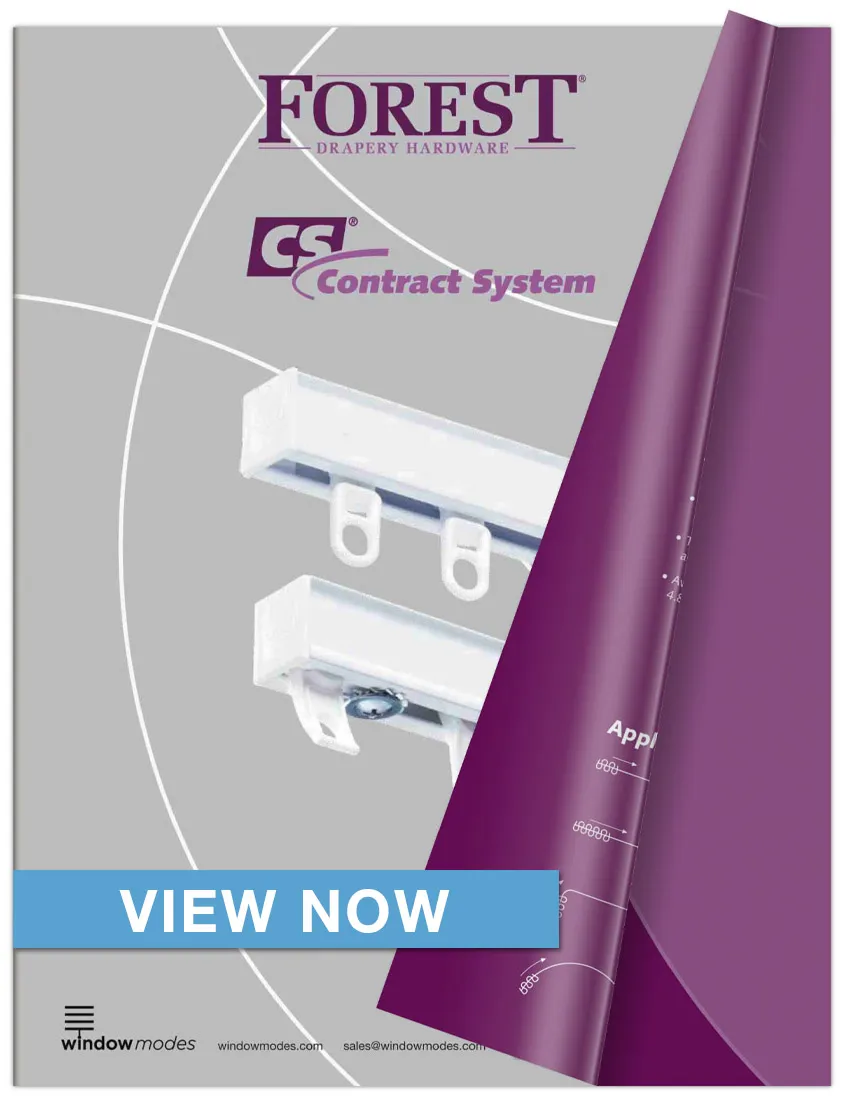
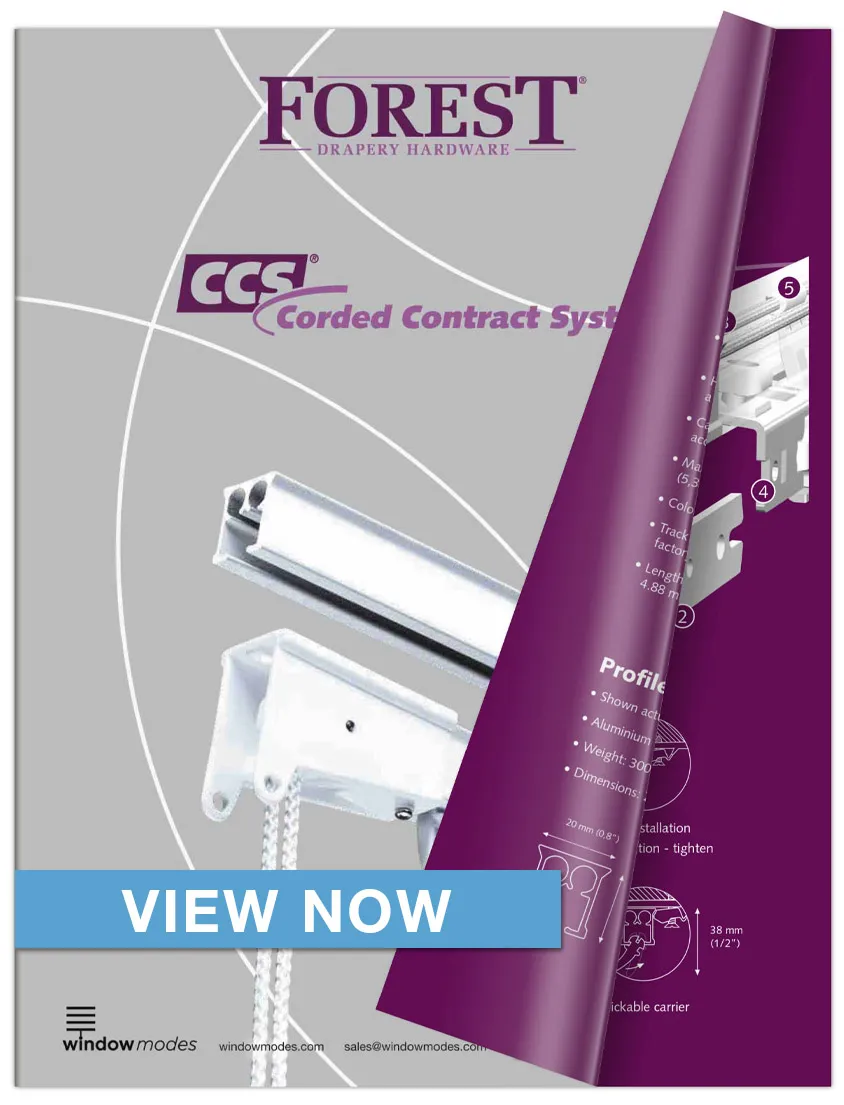
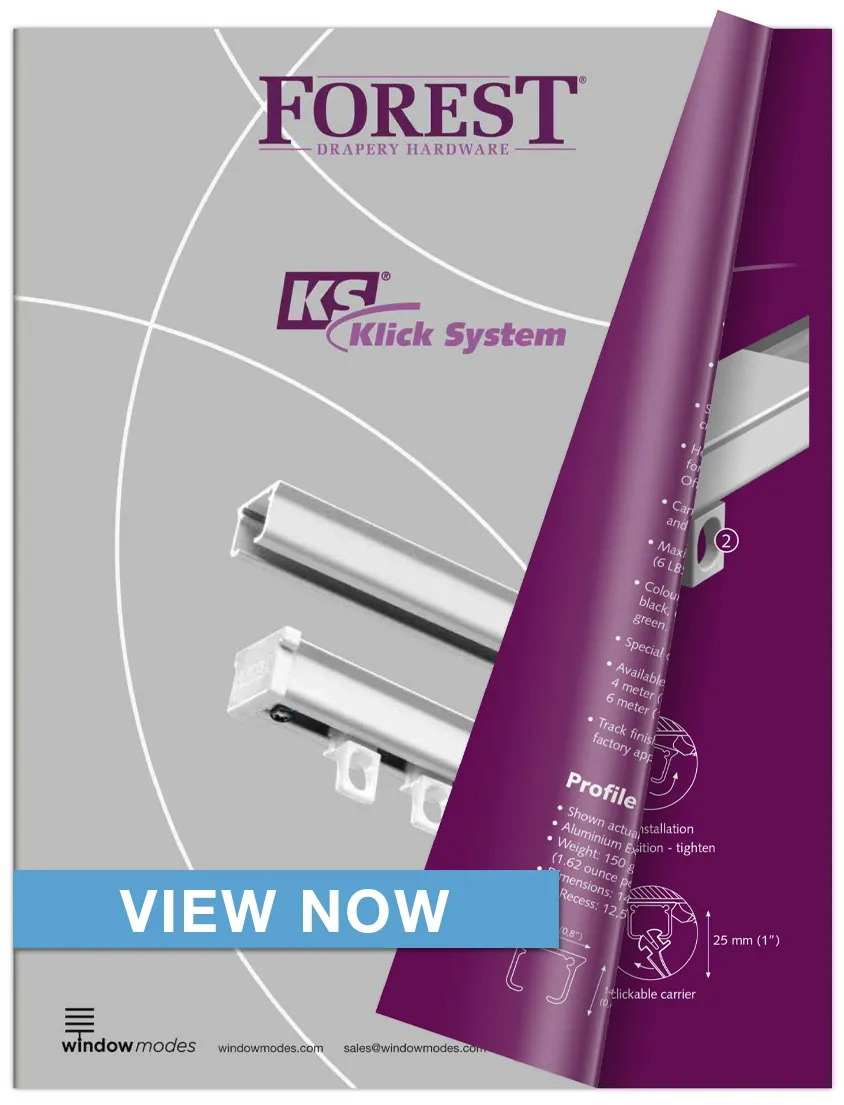
Manual drapery track on Forest Group hardware — the trade-standard hand-drawn and baton-drawn systems — in straight runs, curved sections, and spliced lengths.
Most drapery track is specified to disappear — recessed into a ceiling pocket or run inside a concealment profile, so the drapery falls from a clean ceiling line with no visible hardware. If you want it recessed in the ceiling, go check out the Blindspace track trim page.
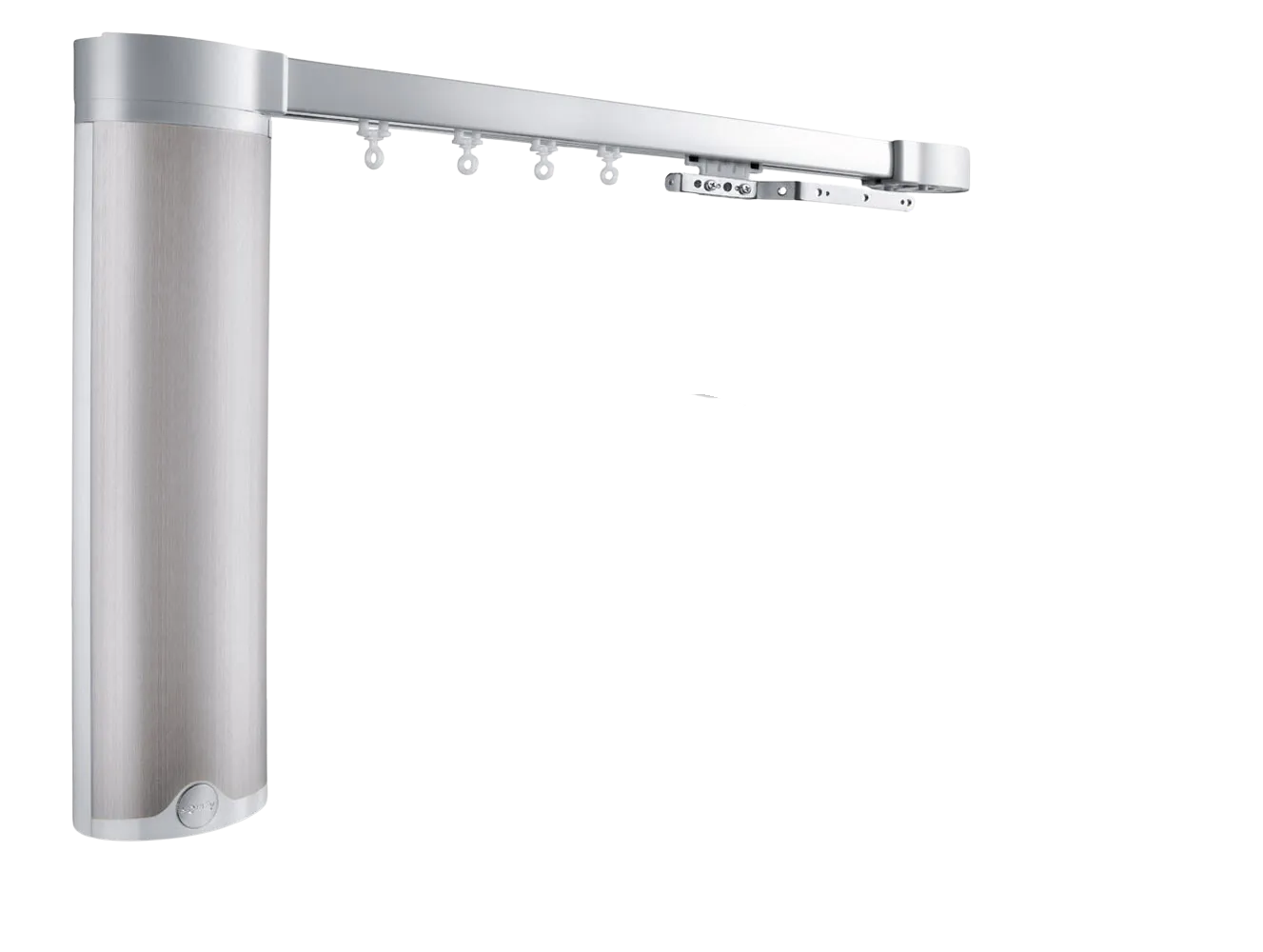
Close-up of a white curtain track mounted on a ceiling with rollers and a hook attachment.

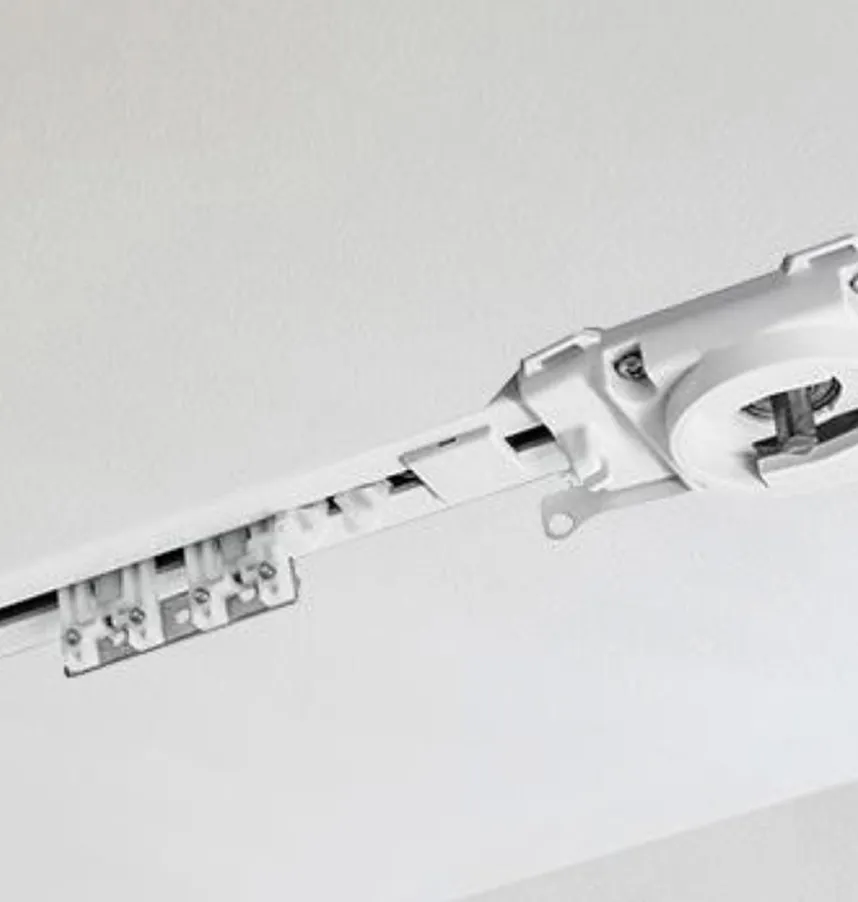
The top-mount motor — in the ceiling, out of the fabric line.

On a standard motorized track, the motor sits at the end of the track inside the pocket — so on a shallow ceiling it either hangs into the fabric line or forces a deeper pocket to hide it. Window Modes fabricates a custom top-mount motor end that seats the motorabovethe track, fully in the ceiling: invisible through the drapery, no deeper pocket needed.
It's the capability Window Modes is known for, originally engineered for Lutron drapery track on shallow-ceiling conditions where a standard side-mount motor isn't architecturally acceptable — and something we haven't seen anyone else doing.

Motorized drapery track.

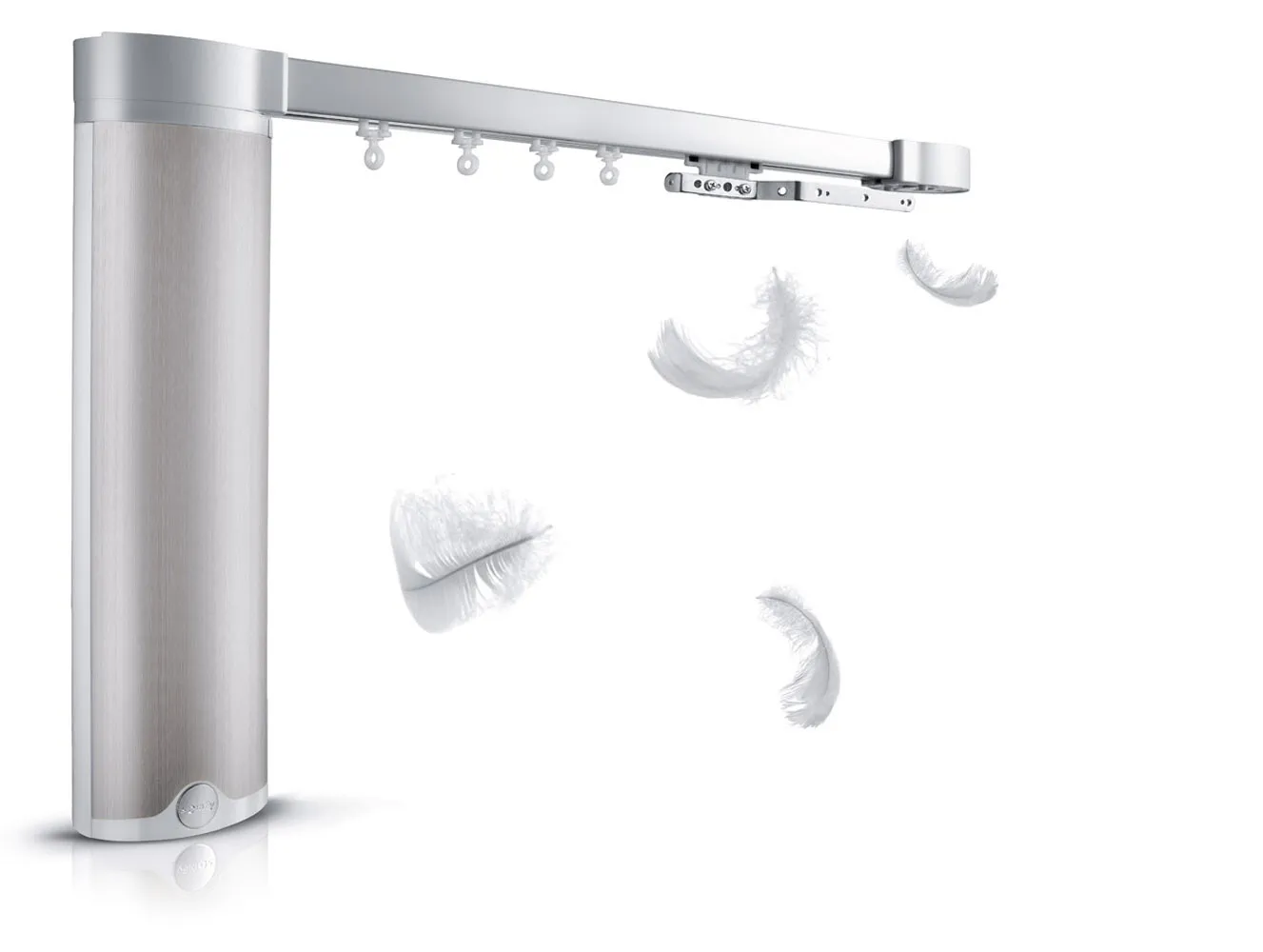
Modern silver curtain track system with white feathers floating nearby on white background.

Glydea

The trade-standard drapery motor — quiet, smooth, adjustable speed. Fabricated in single and dual configurations, straight and curved.

Lutron integration

Built to integrate with Lutron drapery motorization and the wider control system — including the custom top-mount end for shallow ceilings.

Built to protocol

For AV-controlled jobs, the assembly is built to the integrator's protocol. Window Modes engineers the physical track and motor; the integrator owns the control system.

Curved track, 90° bends, and custom shapes.
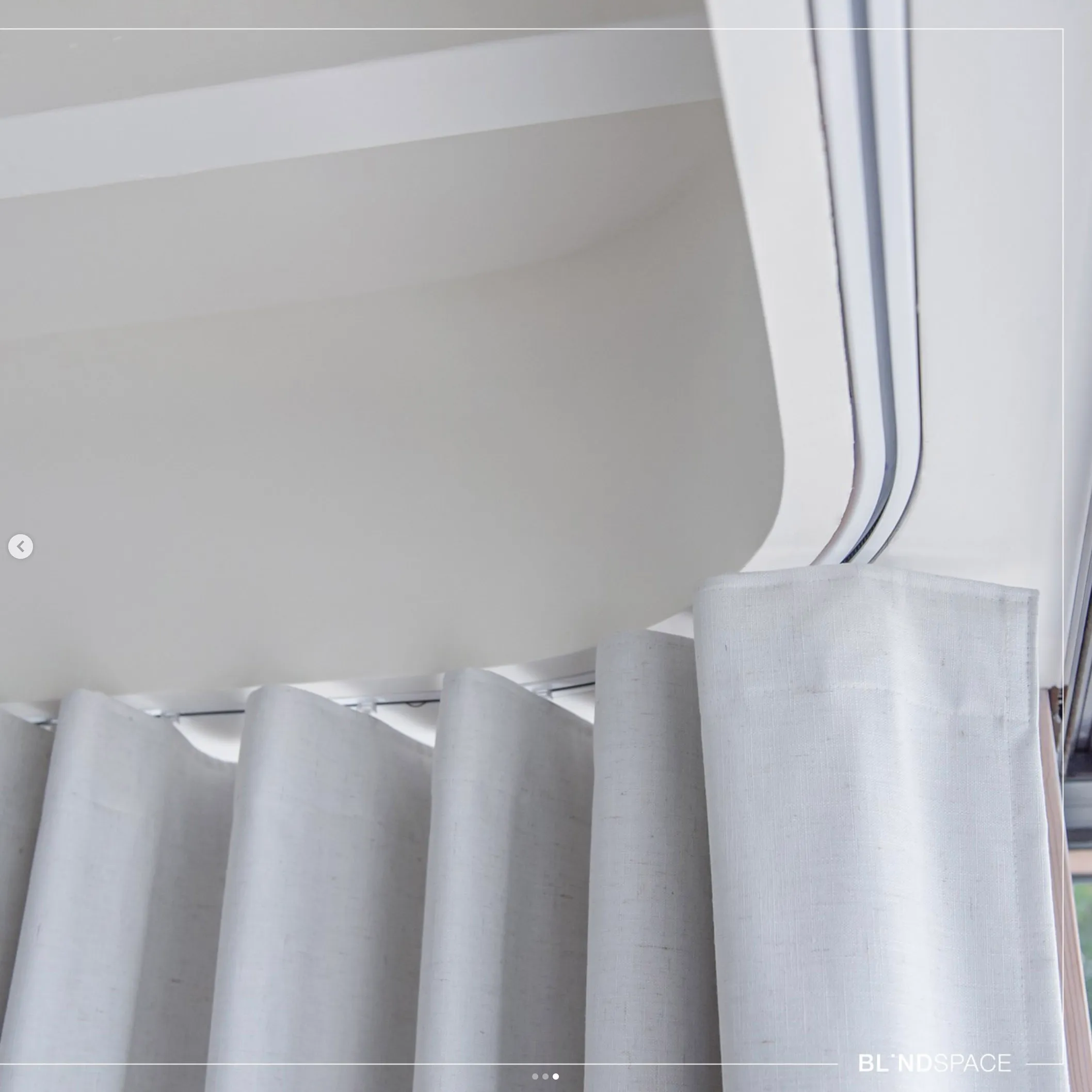
Most drapery track is straight. The runs that aren't are where in-house fabrication earns its place.
Window Modes fabricates custom-curved track for bay windows and radius walls, 90-degree-bend trackthat turns a hard corner in one continuous run, and arched and radius-bent track that follows a curved ceiling. Each is bent to the radius the drawing calls for, shipped in joinable sections where a run is too long to ship whole, and assembled on site as one continuous line.
A bay window is the clearest case: three glazing panels, one track, two bends — fabricated as a single coordinated run, not three tracks that don't quite meet at the mullions.

Corners, returns, and L-shape runs.

Drapery that wraps a corner or returns to the wall needs track built for it — not two straight tracks butted together.
Window Modes fabricates drapery returns— where the track curves back to meet the wall so the panel closes with no light gap at the leading edge — and L-shape and U-shape runs for corner windows and three-sided bays. The bend is fabricated into the track, not added as a separate corner fitting, so the carriers glide through the turn and the drapery moves as one continuous panel around the corner.

Track prepared for TrackTrim concealment.

When the track needs to vanish entirely, it runs inside TrackTrim — a recessed profile that plasters flush into the ceiling, leaving a continuous surface above the drapery.
When you order track and tracktrim, we'll predrill the track for the fixing bracket as a service, so that installation is easier for you.

Drapery track, answered.

What is a recessed drapery track?

A recessed drapery track is a curtain track set into a ceiling pocket or concealment profile so the track itself is not visible. The drapery falls from a clean ceiling line with no exposed hardware. Window Modes fabricates the track for this condition and preps it to install inside a recessed profile such as TrackTrim.

What is the difference between recessed and concealed drapery track?

The terms overlap. Recessed means the track sits up inside a ceiling pocket or channel rather than surface-mounted below the ceiling. Concealed means the track is not visible in the finished room, achieved by recessing it or by installing it inside a concealment profile like TrackTrim that plasters flush into the ceiling. A recessed track is one way to achieve a concealed result.

Can drapery tracks make 90-degree bends in the ceiling?

Yes. Window Modes fabricates 90-degree-bend drapery track in-house. The bend is built into the track as a single continuous run, so the carriers glide through the corner without crossing a joint. This turns a hard architectural corner with one continuous track rather than two straight runs meeting at the corner.

Can drapery tracks be configured for corner windows and returns?

Yes. Window Modes fabricates drapery returns where the track curves back to meet the wall so the drapery closes with no light gap, and L-shape and U-shape runs for corner windows and three-sided bays. The bend is fabricated into the track rather than added as a separate corner fitting, so the drapery moves as one continuous panel around the corner.

Can recessed drapery tracks be motorized?

Yes. Window Modes fabricates motorized drapery track built to install recessed in a ceiling pocket or inside a TrackTrim profile. For shallow-ceiling conditions, the custom top-mount motor positions the motor above the track in the ceiling plane, so a recessed motorized track does not need a deeper pocket to hide the motor.

Can drapery tracks be custom curved?

Yes. Window Modes fabricates custom-curved drapery track in-house for bay windows, radius walls, and curved ceilings. The track is bent to the radius the drawing specifies, shipped in sections where a run is too long to ship whole, and joined on site so the finished track reads as one continuous curved line rather than a series of straight segments.

How are curved drapery tracks fabricated?

Curved drapery track is fabricated by bending the track extrusion to the specified radius in the workroom, then preparing the carriers and end-stops to travel smoothly through the curve. Window Modes fabricates the curve to the architectural condition and ships the run in joinable sections for long runs, so it installs as one continuous track.

Who fabricates recessed drapery tracks in the US?

Window Modes fabricates recessed drapery track in-house in Hudson Valley, NY. It is one of the few US fabricators that makes the track itself, including curved, 90-degree-bend, motorized, and TrackTrim-prepped versions, rather than only reselling a stock profile. Other distributors sell concealment profiles but do not fabricate the matched track that installs inside them.

Can drapery track be installed in a shallow ceiling?

Yes. A shallow ceiling is the condition the custom top-mount motor was engineered for. Rather than a side-mount motor that needs a deeper pocket to stay hidden, the top-mount end positions the motor above the track in the ceiling plane. Window Modes fabricates the track and motor end to the available depth rather than to a published minimum.

What is a recessed drapery track profile?

A recessed drapery track profile is the channel the track sits inside when it is set up into the ceiling, for example TrackTrim, which plasters flush into the ceiling so only the drapery is visible below. Window Modes fabricates the drapery track prepped to install inside the profile and supplies the TrackTrim concealment profile itself.

Talk through the track before it's on the drawing.

Architects and designers: download the CAD and BIM files, or talk through a non-standard track condition — a curve, a corner, a shallow ceiling, a top-mount motor — directly with the tech team before it's committed to the drawing.
Dealers: buy direct — fabrication, drawing approval, and the tech team behind the spec. Become a Window Modes dealer →
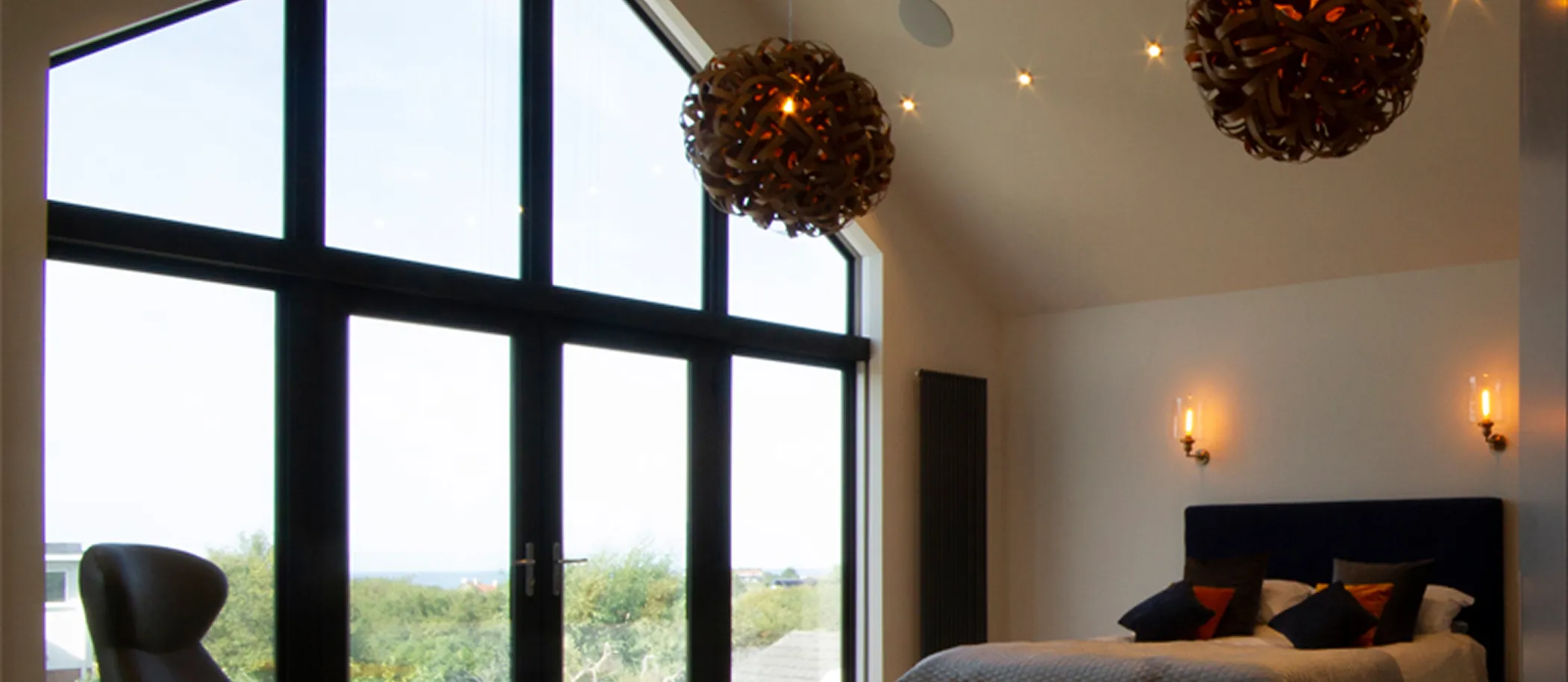
Modern bedroom with tall black-framed windows, hanging wooden light fixtures, and a bed with dark pillows.